
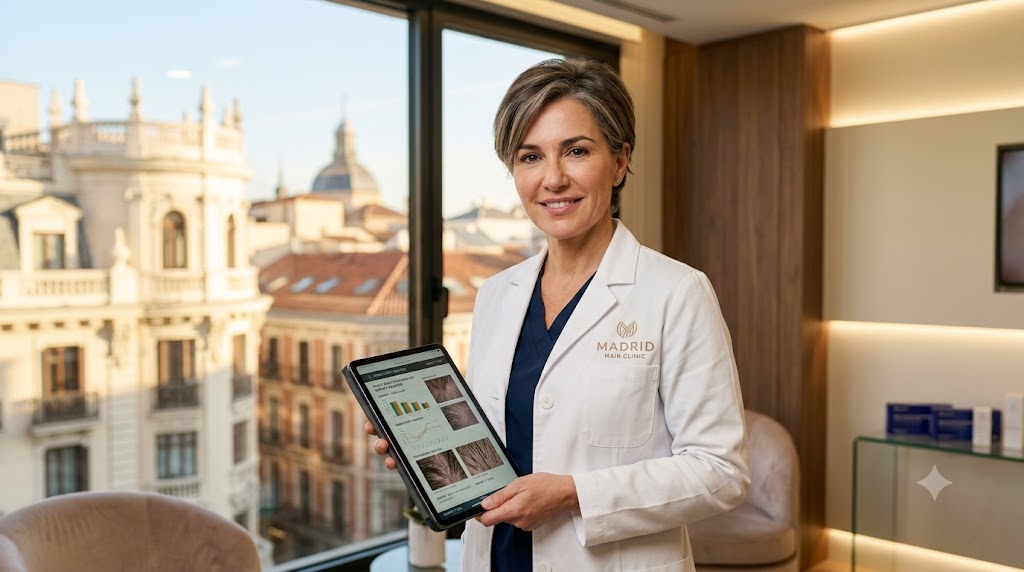
Medical Review: This content is supervised and verified by
Dr. Carlos Portinha.
Introduction: The Paradox of Choice in Spain’s Hair Restoration Market
In recent years, Spain has emerged as a premier European destination for advanced medical tourism, specifically within the field of hair restoration. The combination of world-class clinical infrastructure, highly competitive pricing frameworks, and stringent European healthcare standards has led thousands of international patients to seek treatment in cities like Madrid, Barcelona, and Valencia. However, this booming market has also created a paradox of choice. With hundreds of clinics competing for digital visibility, patients are frequently overwhelmed by conflicting marketing claims, fluctuating price points, and diverse surgical methodologies.
When choosing to undergo a hair transplant, the stakes are remarkably high. Unlike many cosmetic procedures, the donor hair supply—typically harvested from the occipital and temporal regions of the scalp—is strictly finite. A poorly executed surgery can lead to permanent donor depletion, unnatural hairline design, low graft survival rates, and in severe cases, deep tissue necrosis or systemic infection. Therefore, identifying a qualified, legally compliant, and ethically driven hair transplant surgeon is the single most critical step in a patient’s hair restoration journey. This comprehensive guide dissects the regulatory, legal, and professional frameworks governing hair transplant surgery in Spain, demystifying what board certifications and professional memberships, such as the International Society of Hair Restoration Surgery (ISHRS), truly mean for patient safety and optimal surgical outcomes.
The Legal Framework: Medical Regulations and Licensing in Spain
To safely navigate the hair transplant sector in Spain, patients must understand that the country enforces strict, uncompromising statutory regulations on who can legally perform surgical hair restoration. Unlike some regions where cosmetic procedures occupy a legal gray area, Spanish law treats hair transplantation as a formal surgical intervention that requires specific medical qualifications.
1. Mandatory Registration (El Número de Colegiado)
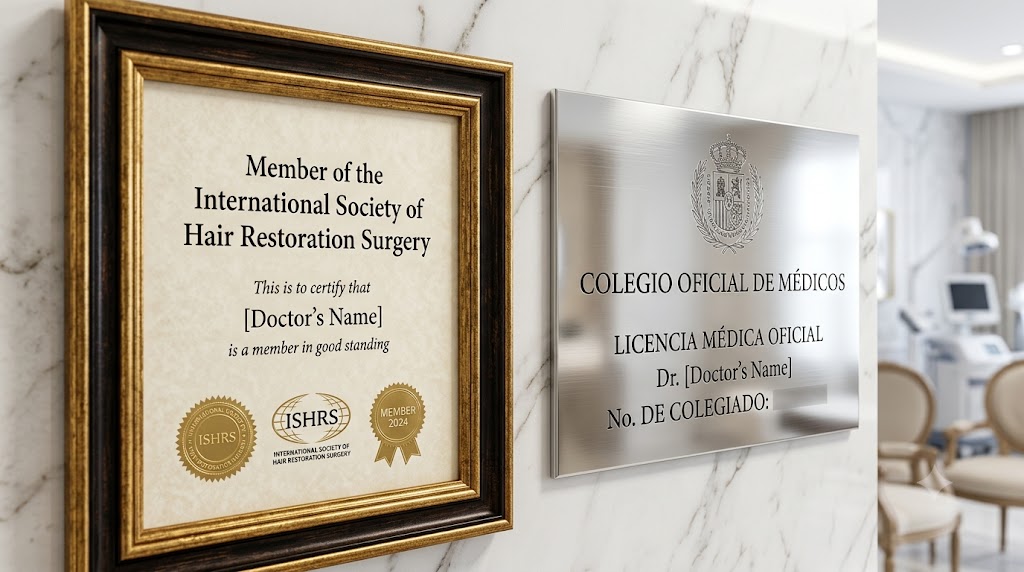
Every medical practitioner operating legally within the Kingdom of Spain must be registered with the Organización Médica Colegial (OMC) through their respective provincial medical association, known as the Colegio Oficial de Médicos (for instance, ICOMEM in Madrid or COMB in Barcelona). This registration grants the doctor a unique Número de Colegiado (Medical License Number).
Before booking any procedure, an international patient should explicitly request this number. Any legitimate surgeon will provide it transparently. This number can be verified instantly on the public, official database of the OMC. If a practitioner is not actively registered, performing any invasive procedure constitutes a severe criminal offense under Spanish law (intrusismo profesional).
2. Specialty Certifications and Trichology Masters
While a general medical degree allows a doctor to practice medicine, top-tier hair transplant surgeons in Spain typically hold specialized postgraduate qualifications. Look for surgeons who have completed dedicated university master’s degrees in Trichology and Hair Transplantation (Máster en Tricología y Trasplante Capilar) from accredited Spanish universities, or those who possess specialized training in Dermatology or Plastic, Aesthetic, and Reconstructive Surgery. These academic distinctions guarantee that the surgeon has dedicated years to studying the specific anatomical, physiological, and pathological aspects of human hair and scalp tissue.
Demystifying the ISHRS: What Membership Really Means
When researching top-rated clinics on platforms like SpainHairIndex, patients frequently encounter the acronym ISHRS prominently displayed on surgeon biographies. The International Society of Hair Restoration Surgery is the leading global, non-profit medical association dedicated to the field of hair loss treatment and restoration. With over 1,000 members spanning across dozens of countries, the ISHRS serves as the golden standard for educational excellence and ethical advocacy in the industry.
However, patients must avoid a common misconception: the ISHRS is not a government licensing board or a statutory regulatory body. Membership in the ISHRS does not replace a surgeon’s legal obligation to hold a valid medical license in Spain. Instead, ISHRS membership acts as a voluntary, highly prestigious peer-reviewed credential indicating that the surgeon is deeply embedded in the global scientific community and adheres to a strict international code of medical ethics.
To maintain active membership within the ISHRS, a surgeon must continuously demonstrate:
- An ongoing, dedicated percentage of their medical practice focused explicitly on hair restoration.
- A commitment to formal continuing medical education (CME), ensuring they are trained in the latest scientific breakthroughs, advanced FUE and FUT methodologies, and regenerative medicine therapies.
- Total adherence to the ISHRS Code of Ethics, which strictly prohibits misleading marketing, false graft-survival guarantees, and the illegal delegation of surgery to unlicensed staff.
Understanding ISHRS Tiers: Members vs. Fellows
The ISHRS recognizes different tiers of professional status based on experience, scientific contributions, and leadership within the medical community. Understanding these tiers helps patients accurately assess a surgeon’s clinical standing:
| ISHRS Tier Status | Key Requirements & Significance |
|---|---|
| Member / Associate Member | Licensed physicians who have demonstrated formal training, a dedicated hair restoration practice, and full compliance with ethical guidelines. They have full access to global scientific research and regular peer-led training. |
| Fellow (FISHRS) | An elite designation awarded to surgeons who have met exceptional criteria. This includes holding board certifications, publishing original research in scientific journals, lecturing at international congresses, and serving on specialized educational committees. A FISHRS designation represents the absolute pinnacle of global peer recognition. |
The “Technician-Only” Dilemma: EU Regulations and Patient Safety
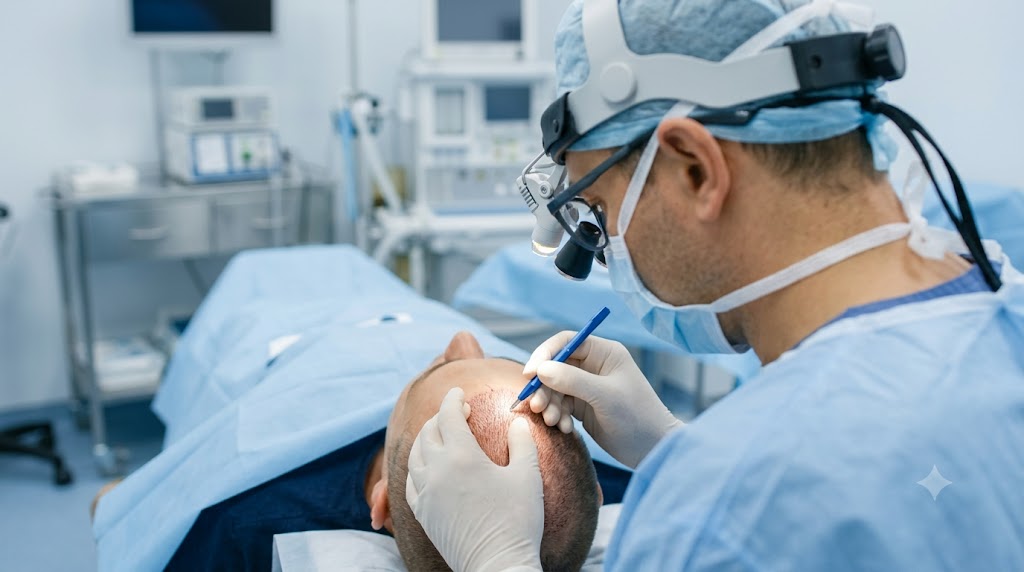
One of the most profound public health issues plaguing the global hair transplant industry is the rise of low-cost, assembly-line clinics where the licensed doctor merely acts as a marketing figurehead, leaving the entirety of the surgical procedure to be performed by technicians or assistants. This practices is often referred to as the “black market” or “technician-only” clinic model.
The ISHRS has launched major global awareness campaigns highlighting the severe risks associated with this trend. Under both European Union health directives and Spanish medical law, a hair transplant is defined as an invasive surgical procedure. Consequently, key steps of the surgery must be executed strictly by a licensed doctor.
Specifically, the following critical steps cannot be legally delegated to non-medical technicians in a Spanish clinic:
- Pre-Operative Diagnostic Evaluation: Evaluating the underlying cause of alopecia, calculating donor density using digital trichoscopy, and ruling out scarring alopecias or systemic conditions that contraindicate surgery.
- Surgical Planning and Hairline Design: Determining the safe extraction boundaries to prevent permanent donor over-harvesting and designing a natural, age-appropriate hairline.
- The Incision Phase (Channel Opening): Making the micro-incisions in the recipient area. This step determines the precise depth, angle, orientation, and density distribution of the new hair, requiring advanced surgical judgment.
- Harvesting Plan: Overseeing the extraction depth to avoid damaging the underlying dermal structures and limiting the follicle transection rate.
While highly trained clinical technicians are vital for assisting with graft counting, sorting under stereomicroscopes, and delicately placing the follicles into pre-opened channels, the primary surgical workload must remain in the hands of the medical doctor. Clinics in Spain operating under rigorous clinical models ensure total transparency regarding the exact roles the surgeon and the technicians play during your intervention.
European Union Regulations and Clinical Sanitization Standards

Choosing Spain over non-EU destinations provides international patients with a powerful, systemic layer of protection: mandatory compliance with European Union healthcare mandates. Clinics operating in Madrid or Barcelona are subject to unannounced, rigorous audits by Spanish regional health authorities (such as the Consejería de Sanidad).
These audits ensure that the clinic meets stringent standards regarding:
- Operating Room Sterilization: Utilization of advanced autoclave sterilization, surgical-grade HEPA air filtration systems, and strict protocols to completely eliminate cross-contamination and hospital-acquired infections.
- Pharmacological Safety: All local anesthetics (such as Lidocaine or Bupivacaine) and emergency resuscitation medications must comply fully with the European Medicines Agency (EMA) standards. Emergency protocols, including the presence of automated external defibrillators (AEDs) and trained emergency staff, are strictly mandatory.
- Data Protection (GDPR): Patient medical histories, before-and-after photographic documentation, and diagnostic data must be secured under strict European General Data Protection Regulations.
The Ultimate Checklist for International Patients
To ensure absolute safety, peace of mind, and an elite aesthetic result, use this verified clinical checklist when analyzing hair transplant surgeons in Spain via SpainHairIndex:
- Verify the Medical License: Request the surgeon’s Número de Colegiado and cross-reference it on the official Spanish OMC database.
- Check ISHRS Standing: Confirm if the surgeon is an active Member or Fellow (FISHRS) on the official ISHRS global directory.
- Inquire About Surgery Delegation: Ask directly, “Who will perform the channel opening and extraction phases of my surgery—the doctor or a technician?”
- Examine Before-and-After Portfolios: Look for clear, high-resolution, unedited photographic evidence showcasing consistent results 12 to 18 months post-op, paying specific attention to natural hairline transitions and healthy donor area recovery.
- Evaluate the Diagnostic Protocol: Avoid clinics that offer instant pricing or graft estimates based solely on low-quality mobile photos without analyzing your comprehensive medical history and potential genetic or autoimmune hair loss triggers.
Conclusion: Prioritizing Ethics Over Marketing
Surgical hair restoration is a permanent, life-changing procedure. When executed by a legally licensed, ethically driven surgeon who aligns with international organizations like the ISHRS and operates within strict European regulatory frameworks, a hair transplant delivers highly natural, dense, and confidence-restoring results. By prioritizing medical credentials, board certifications, and explicit surgical compliance over aggressive low-cost marketing, patients can confidently access the very best medical care that Spain’s hair restoration sector has to offer.
Leave a Reply