
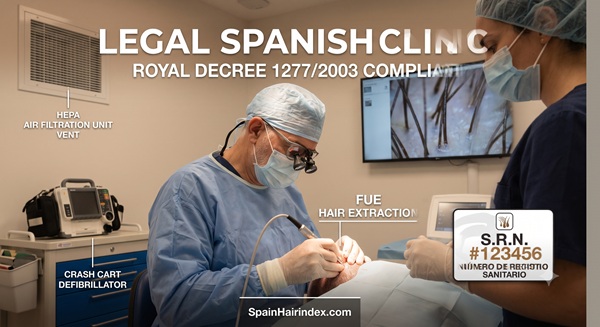
Spain has emerged as one of the premier destinations for premium hair restoration in Europe. While countries like Turkey dominate the high-volume, low-cost market, Spain attracts patients who prioritize absolute medical safety, strict European Union regulations, and robust legal protections.
However, running a legitimate hair transplant clinic in Spain involves navigating an incredibly complex web of bureaucracy, regional health inspections, and strict national laws. At the center of this regulatory framework is the famous Royal Decree 1277/2003 (Real Decreto 1277/2003).
In this investigative guide, we look past the marketing brochures to analyze the harsh legal reality of operating a hair clinic in Spain. What does the law actually require to open a minor surgery room (quirófano de cirugía menor)? And more importantly, how can you spot low-cost clinics that are cutting corners and breaking Spanish law?
The Golden Rule: Royal Decree 1277/2003 Explained
In Spain, a hair transplant is not considered a simple aesthetic treatment that can be done in a beauty salon or a standard consultation office. It is classified legally as a surgical procedure.
Under Royal Decree 1277/2003, which establishes the general bases for the authorization of health centers, any facility performing hair transplants must hold a specific, active sanitary license. Specifically, the clinic must be registered under the medical specialty code C.2.5.2 (Clínicas de Cirugía Mayor Ambulatoria) or at the very least have an authorized integrated unit for Aesthetic Medicine (U.48) or Dermatology (U.4) with a certified minor surgery theater.
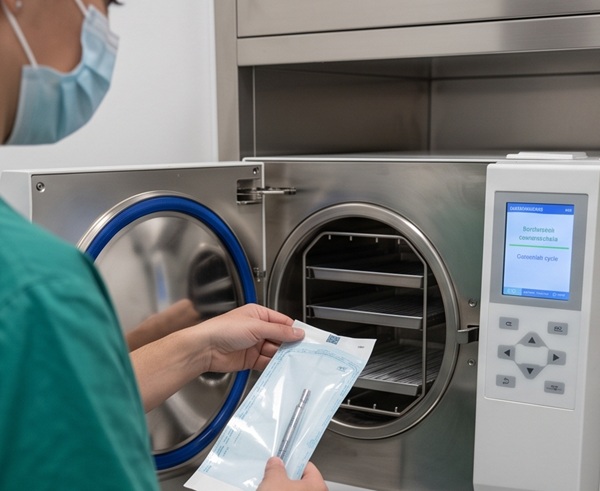
If a clinic cannot provide its official registration number (known as the Número de Registro Sanitario), it is operating illegally. No exceptions.
The Anatomy of a Legal Minor Surgery Room (Quirófano)
Regional health departments in Spain (such as the Consejería de Sanidad in Madrid or Andalusia) enforce brutal physical and technical standards before granting a license. A legal hair transplant room requires far more than just a surgical chair and good lighting.
Here are the real architectural and technical requirements demanded by Spanish inspectors:
1. Ventilation and Air Filtration Standards
To prevent airborne bacteria from contaminating open wounds during a 6-to-8-hour FUE procedure, the operating room must have dedicated air treatment systems. Legally authorized rooms require absolute HEPA filters and a minimum number of air renewals per hour to maintain a sterile atmosphere, separate from the building’s general air conditioning.
2. Material and Architectural Surfaces
The floors, walls, and ceilings of the surgical room must be completely seamless, non-porous, and resistant to heavy chemical disinfectants. Any visible joints, standard house paint, or hard-to-clean corners will result in an immediate failure during a state health inspection.
3. Strict Waste Management (Residuos Biosanitarios)
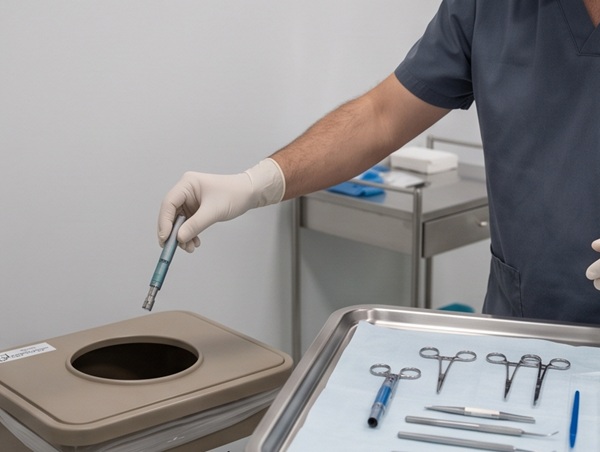
Hair transplantation generates biological waste, including blood-soaked gauze and thousands of used surgical needles/punches. Spanish law requires clinics to sign formal, audited contracts with authorized hazardous waste disposal companies (Group III waste management). Medical waste cannot simply be thrown in the standard trash.
The Reality: How Underground Clinics Evade the Law
Despite these strict laws, the booming demand for local hair transplants has created a dangerous gray market in Spain. “Fly-by-night” clinics frequently open in major cities by exploiting regulatory loopholes or operating entirely under the radar.
The “Aesthetic Center” Deception: The most common violation in Spain involves standard beauty salons registering as simple consultation centers, only to secretly perform highly invasive FUE surgeries over the weekend when state inspectors are off-duty.
These sub-standard clinics cut costs by ignoring the Royal Decree in several ways:
- Unlicensed Operating Rooms: Performing surgeries in standard treatment rooms without HEPA filtration, dramatically increasing the risk of post-op scalp infections.
- Reusing Single-Use Punches: Legally, FUE extraction punches are strictly single-use. Illegal clinics often sterilize and reuse them to save money, dulling the blade and causing severe scarring (micro-scarring) to the patient’s donor area.
- Lack of Emergency Infrastructure: A legal clinic in Spain is required by law to have a fully stocked crash cart (carro de paradas) including a defibrillator (DESA) and emergency cardiovascular medication. Illegal centers lack this vital safety net.
The Legal Boundaries of the Medical Team
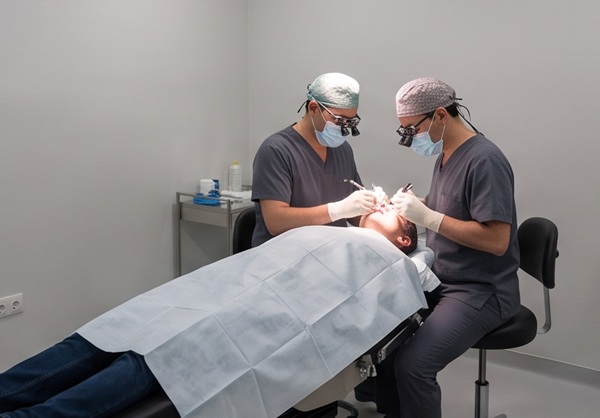
The Royal Decree doesn’t just regulate the bricks and mortar; it regulates the hands holding the tools. In Spain, only a licensed medical doctor is legally allowed to perform surgical incisions (opening the channels) and execute the extraction of the grafts.
While technicians and specialized nurses play a crucial, legal role in sorting, cleaning, and counting follicular units under a microscope, they cannot legally touch the patient with surgical blades or micromotors without the doctor actively executing the step. Clinics that practice “ghost doctoring”—where a doctor signs the paperwork but leaves the room entirely to cheap, unqualified staff—are violating the strict terms of their Spanish medical registry.
How Patients Can Verify a Clinic’s Legitimacy
If you are planning to get a hair transplant in Madrid, Barcelona, Valencia, or any other Spanish city, protecting your health means doing basic legal homework. Before signing any contract or paying a deposit, request the following three pieces of data:
- The Registro Sanitario Number: A legitimate clinic will proudly display this on their website footer. You can cross-reference this code on the official Spanish Ministry of Health database (REGECS).
- The Surgeon’s Colegiado Number: Ensure the doctor is officially registered with the local Colegio Oficial de Médicos.
- Civil Liability Insurance: Ask if the clinic carries the legally mandated Seguro de Responsabilidad Civil Médica that specifically covers hair restoration procedures.
The SpainHairindex Verdict
The strictness of Spanish legislation is not a bureaucratic annoyance; it is your ultimate shield as a patient. When a clinic complies with every facet of the Spanish Royal Decree, the risks of infection, donor depletion, and surgical complications drop to near zero.
The reality is simple: safety costs money. If a clinic in Spain offers prices that mimic the ultra-low rates of non-EU destinations, they are likely bypassing the expensive architectural, sanitation, and licensing standards mandated by law. Do not gamble with your scalp—verify the facility’s legal status before making your choice.
Leave a Reply