
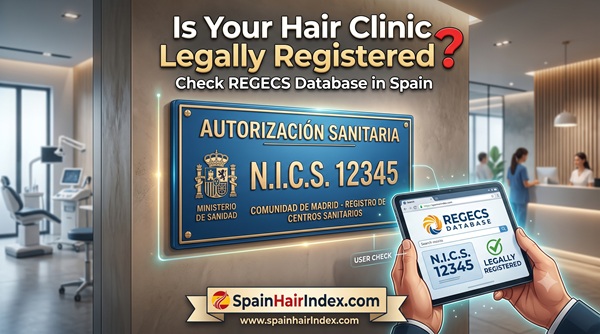
The demand for hair transplants in Spain has skyrocketed in recent years. With world-class surgeons operating in cities like Madrid, Barcelona, and Malaga, patients no longer feel the absolute need to travel abroad for quality results. However, this boom has also led to the opening of unauthorized centers, aesthetic cabins, or clinics operating without the mandatory sanitary licenses.
In Spain, a hair transplant is considered a minor surgical procedure. Therefore, any center offering this service must legally hold an active Sanitary License (Autorización Sanitaria) granted by its respective Autonomous Community.
If a clinic cannot prove it is officially registered, you are not just risking your money—you are risking your health. Fortunately, Spain’s Ministry of Health provides a public, free, and official tool to verify this in less than two minutes: the REGECS database. Here is your step-by-step practical guide on how to use it.
What is REGECS and Why Does It Matter?
REGECS stands for Registro General de Centros, Servicios y Establecimientos Sanitarios (General Registry of Sanitary Centers, Services, and Establishments). It is the ultimate official database managed by the Spanish Ministry of Health (Ministerio de Sanidad).
Every single legitimate hospital, dental clinic, aesthetic medicine center, and hair transplant clinic in Spain is assigned a unique national registry number, known as the N.I.C.S. (Número de Identificación de Centro Sanitario).
If a clinic does not appear in this database, it means one of three things:
- It has never been inspected or approved by health authorities.
- Its sanitary license has expired or been revoked.
- It is operating under the radar, disguised as an aesthetic salon (which is strictly prohibited from performing surgical micro-grafts).
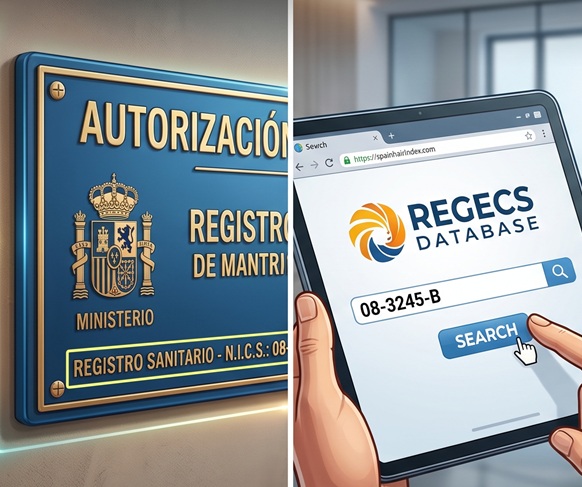
Step-by-Step: How to Verify a Clinic in REGECS
You do not need any digital certificates or official logins to access this registry. It is completely public. Follow these simple steps to audit your prospective clinic:
Step 1: Access the Portal
Go directly to the official search engine of the Ministry of Health. You can find it by searching for “Buscador de Centros REGECS” or accessing the official site directly: regcess.mscbs.es (the General Registry portal).
Step 2: Fill in the Search Criteria
You do not need to fill in every field. In fact, to avoid database errors, it is better to search using only one or two filters:
- Nombre del Centro (Name of the Center): Enter the official commercial name or, even better, the name of the corporate entity behind it (the SL or SA company name found in their website’s Legal Notice/Aviso Legal).
- Comunidad Autónoma / Provincia: Select the region where the clinic is located (e.g., Comunidad de Madrid, Andalucía) to narrow down the results.
Step 3: Analyze the Results (The Crucial Codes)
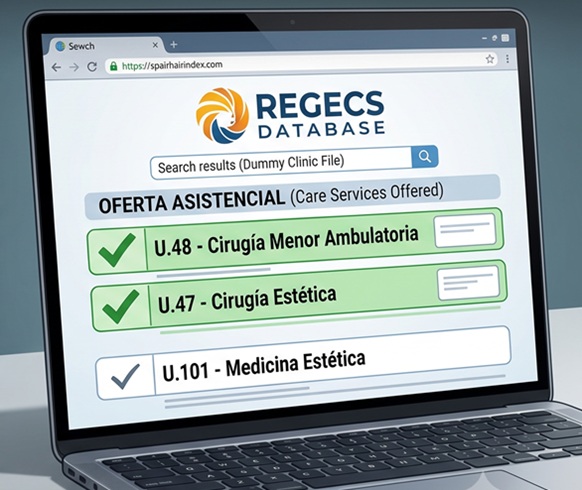
Once you click “Buscar” (Search), if the clinic is legal, its file will appear. Click on it and look for the “Oferta Asistencial” (Care Services Offered) tab. To perform hair transplants legally, the clinic must display at least one of these official medical codes:
| U. Code | Service Name in Spanish | What it means for your transplant |
|---|---|---|
| U.48 | Cirugía Menor Ambulatoria | Mandatory. Authorizes the center to perform outpatient minor surgeries (such as FUE/DHI extraction and implantation under local anesthesia). |
| U.47 | Cirugía Estética | Highly recommended. Validates that the center is legally authorized to perform aesthetic surgical procedures. |
| U.12 | Dermatología | Excellent sign. Many top hair surgeons are dermatologists, which ensures expert diagnosis of alopecias. |
Note: If the clinic only displays the code U.101 (Medicina Estética) but lacks U.48 (Cirugía Menor), they are legally allowed to perform PRP or mesotherapy, but they cannot legally perform a surgical hair transplant.
Red Flags: What to Do If the Clinic Is Not Found
If you search for the clinic and nothing comes up, do not panic immediately, but act with extreme caution. Follow these verification steps:
- Check their “Aviso Legal” (Legal Notice): Sometimes, the clinic’s commercial brand (e.g., “Alpha Hair Clinic”) is different from the registered sanitary name (e.g., “Clínica Médica Fernández S.L.”). Always look for the company name or the N.I.C.S. number at the bottom of their website.
- Ask the clinic directly: Send them a quick email asking: “¿Cuál es el número de registro sanitario o NICS de la clínica?”. A transparent, legal clinic will proudly give you this number immediately. If they dodge the question, make excuses, or say “it’s currently being processed,” do not book your surgery there.
- Look for the Physical plaque: By Spanish law, every authorized health center must display an official blue/green acrylic plaque near its main entrance showing its regional registration number. If you visit the clinic for a consultation and see no official plaque, ask about it.
The SpainHairIndex Verdict
In Spain, you have access to some of the best medical infrastructure in the world, but rogue clinics still exist. Taking 5 minutes to verify the clinic’s legal status on the REGECS database is the easiest, most effective way to protect yourself from medical malpractice and illegal “hair mills.”
Before you pay any deposit, protect your scalp: audit their N.I.C.S. number, verify their U.48 classification, and ensure you are putting your health in truly authorized, expert hands.
Leave a Reply