
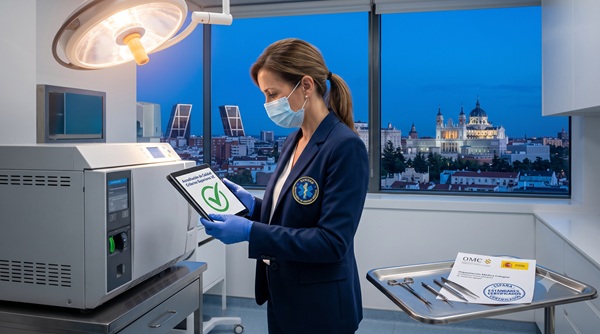
When international patients from the UK, France, or Germany look abroad for hair transplantation or cosmetic surgery, their primary driver is often cost optimization. Destinations like Turkey, Albania, or Asia heavily market all-inclusive packages. However, savvy medical tourists are increasingly shifting their focus from the price tag to a more critical metric: patient safety and structural regulation.
While the European Union establishes a baseline for medical devices and patient rights, certain member states enforce domestic protocols that go far beyond standard directives. Spain stands at the absolute pinnacle of this regulatory rigor.
For a patient traveling from London, Paris, or Berlin, choosing Spain for a hair transplant isn’t just about accessing world-class surgeons; it is a calculated choice to operate within the safest and most strictly inspected medical ecosystem in Europe.
The Dual-Layer Inspection: National Audits vs. Autonomous Rigor
In many medical tourism destinations, clinical oversight is centralized, bureaucratic, and easily bypassed through grey-market loopholes. In Spain, private clinics operate under a merciless, dual-layered inspection framework that makes uncertified operations structurally impossible.
- The Spanish Ministry of Health (Ministerio de Sanidad): Sets high-level criteria for medical licensing, bio-safety protocols, and the mandatory traceability of every single surgical tool and implant component.
- Regional Health Inspections (Consejerías de Sanidad): These autonomous bodies carry out unannounced, on-site structural audits. For instance, a hair transplant clinic in Madrid, Barcelona, or Malaga does not simply fill out paperwork; inspectors physically walk into the operating rooms to audit airflow systems, sterilization logs, and waste management pipelines.
This decentralized execution means inspectors are localized, aggressive, and highly specialized. If a clinic fails to meet a minor sterilization protocol, they face immediate temporary closure and devastating financial penalties—not a warning letter.
Why Spain’s Regulations Explode Beyond Standard EU Directives
To understand why Spain is inherently safer than other European or non-EU destinations, one must look at the specific legal obligations imposed on Spanish hair restoration clinics:
1. Absolute Ban on “Technician-Led” Surgeries
In the grey markets of international medical tourism, the surgeon is often a ghost—appearing only for a brief consultation while low-cost, uncertified technicians perform the actual follicular unit extraction (FUE) and incisions.
Under Spanish Law, this is a criminal offense. The Organización Médica Colegial (OMC) enforces strict guidelines: every surgical step involving tissue penetration must be executed exclusively by a licensed physician registered with the local Medical College (Colegio de Médicos). Technicians are strictly confined to non-invasive support roles, such as sorting grafts under the microscope.
2. Severe Bio-Safety and Operating Room Classification
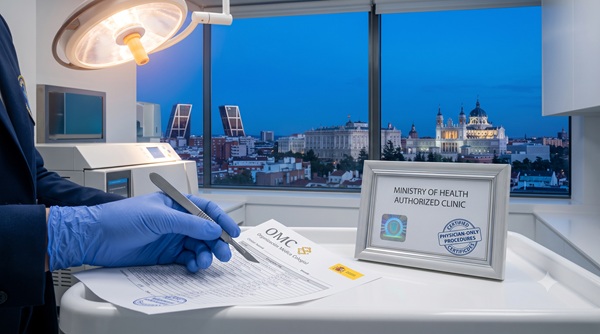
While basic EU standards allow minor hair transplants to happen in standard consultation rooms under local anesthesia, Spanish health inspectors treat hair restoration as a major outpatient intervention. Clinics must possess fully certified minor surgery rooms (Salas de Cirugía Menor Ambulatoria) equipped with standalone emergency backup power, medical-grade positive pressure ventilation to prevent airborne contamination, and full resuscitation equipment.
3. Strict Traceability of Biocompatible Materials
Every punch, blade, and implanter pen used during a Spanish hair transplant is strictly logged. Spain’s implementation of European medical device regulations requires an immutable chain of custody. If a clinic uses a counterfeit tool or attempts to reuse a single-use extraction punch across multiple patients, they face immediate criminal prosecution for violating public health laws.
The Cost of Safety: A Calculated Value for UK and European Patients
For a patient from the UK accustomed to the NHS or private CQC-regulated clinics, or a French patient backed by strict domestic healthcare expectations, traveling to an unregulated market is a massive gamble. The apparent savings of a cheap procedure evaporate instantly if a patient suffers from systemic scalp infections, necrotic donor tissue, or permanently unnatural hairline design.
Why European Patients Prefer Spain’s Legal Protective Shield:
• Civil Liability Insurance: Every practicing surgeon in Spain must hold extensive malpractice insurance by law, providing concrete legal recourse.
• EU Consumer Rights Protection: Unlike traveling to non-EU nations, your contractual and medical data privacy rights are fully protected under GDPR and European consumer legislation.
• Proximity and Continuity of Care: Spain is just a short 2-hour flight from most European hubs, making post-operative follow-ups completely seamless.
Conclusion: The Ultimate Peace of Mind via SpainHairIndex.com
Spain does not compete on cut-rate pricing because compromise is illegal under Spanish health laws. The country competes on clinical excellence, uncompromising hygiene, and total legal transparency.
When navigating your options through SpainHairIndex.com, you are filtering through a marketplace that has already been meticulously vetted by the strictest health inspectors in the world. Choosing a certified clinic in Spain means buying into an ecosystem where your health, your aesthetic future, and your legal rights are completely non-negotiable.
Leave a Reply