
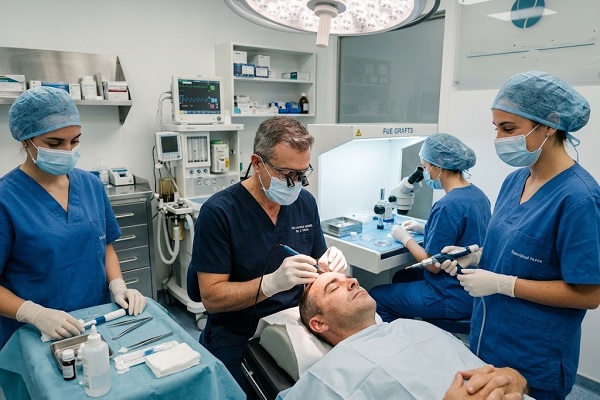
Hair restoration surgeries have seen massive growth in Spain, making Madrid one of the primary European destinations for patients seeking high-quality treatment. This soaring demand has created significant clinical and legal confusion regarding who actually performs each step of the procedure. Anyone considering a hair transplant in Madrid must look beyond aggressive marketing claims and verify the specific roles of the clinical team, as task delegation varies widely from one center to another.
Verified Clinic Selection: Comparing hair restoration options in Spain? Explore our comprehensive directory of accredited hair transplant clinics in Madrid to evaluate surgeon credentials, patient reviews, and medical compliance standards.
Understanding the precise legal boundaries between a lead surgeon, a registered nurse, and a surgical technician ensures patient safety, protects medical licenses, and guarantees natural-looking results. In Spain, strict healthcare legislation dictates exactly which actions require a licensed doctor and which tasks nursing personnel can execute safely. Knowing that only the surgeon can perform incisions and extractions—while nurses handle graft preparation and placement assistance—helps you ask the right questions during your consultation.
The Legal Framework Governing Hair Restoration in Spain
Spanish healthcare laws establish clear boundaries regarding surgical procedures, patient safety, and medical responsibility. The Ley de Ordenación de las Profesiones Sanitarias (LOPS) defines the specific scope of practice for doctors and nursing professionals across all clinical settings. Aesthetic and surgical clinics operating in Madrid must strictly adhere to these regulations, as performing invasive surgical actions without appropriate medical qualifications constitutes illegal medical practice (intrusismo profesional), which carries severe criminal penalties under the Spanish Penal Code.
Medical Responsibility and Direct Supervision
A hair transplant is an invasive surgical procedure rather than a simple cosmetic treatment. Consequently, the operating surgeon assumes full legal and clinical responsibility for every stage of the operation. This is particularly relevant when evaluating FUE clinics in Madrid, where high patient volumes make it essential to verify who leads each phase of the surgery. While nurses and technicians provide essential assistance, the lead doctor must remain physically present during critical steps and cannot delegate core surgical decisions to non-medical staff under any circumstance.
Regulatory Oversight and Sanctions in the Community of Madrid
The Health Ministry of the Community of Madrid conducts regular inspections of hair restoration centers to enforce health regulations. Clinics allowing unqualified staff to perform medical acts risk immediate administrative shutdown and massive financial penalties. Furthermore, insurance companies refuse to cover damages arising from illegal practice, meaning patients who suffer complications at non-compliant clinics often face complex legal battles to secure compensation. Choosing a certified hair clinic in Madrid requires verifying direct surgeon involvement at every critical stage.
Surgical Steps: Who Can Do What in Madrid?
A modern Follicular Unit Extraction (FUE) procedure involves distinct technical steps, each carrying specific anatomical risks and legal qualifications.
| Procedure Phase | Responsible Professional | Legal Classification | Key Technical Requirement |
|---|---|---|---|
| Local Anesthesia Injection | Licensed Medical Doctor / Surgeon | Exclusive Medical Act | Nerve block knowledge & emergency management |
| Punch Micro-Incisions (Donor) | Licensed Medical Doctor / Surgeon | Exclusive Medical Act | Precision depth control to avoid follicle transection |
| Follicle Extraction | Doctor / Nurse under direct supervision | Delegated Technical Act | Gentle handling to preserve graft viability |
| Recipient Site Incisions | Licensed Medical Doctor / Surgeon | Exclusive Medical Act | Exact angle, direction, and density planning |
| Follicle Sorting & Counting | Registered Nurses & Technicians | Assistive Nursing Act | Hydration control and microscopic classification |
| Graft Placement / Insertion | Nurses & Trained Technicians | Assisted Insertion Act | Delicate placement without bending the bulb |
Doctor Infiltration: Why Local Anesthesia Belongs Solely to Surgeons
Infiltration anesthesia represents one of the most critical phases of hair transplant surgery. The surgeon injects local anesthetics, such as lidocaine or bupivacaine, alongside epinephrine to numb the scalp and reduce bleeding. Injecting local anesthetics carries inherent medical risks, including systemic toxicity, cardiovascular fluctuations, or severe allergic reactions. Because managing these acute complications requires immediate medical intervention, Spanish law restricts drug administration via local infiltration exclusively to qualified doctors.
Depth, Angulation, and Vascular Safety
Proper infiltration demands a thorough understanding of scalp anatomy, sensory nerves, and major vascular pathways. The doctor must precisely gauge injection depth to achieve effective nerve blocks while preventing accidental intravascular administration. Moreover, creating proper tumescence separates the upper skin layers from major sub-dermal arteries, protecting underlying blood vessels and making punch extraction significantly safer for the patient. Non-medical staff simply lack the formal clinical training required to execute this vital step safely.
Dosage Calculations and Epinephrine Control
Calculating safe anesthetic doses requires consideration of patient weight, medical history, and concurrent medications. Doctors carefully balance epinephrine levels to control localized bleeding without causing dangerously high blood pressure. Furthermore, medical doctors possess the legal authority to adjust dosages in real time based on patient monitoring. Nurses may assist with equipment preparation, but the surgeon must personally administer the subcutaneous injections.
Incision Creation: The Exclusive Core of Medical Hair Restoration
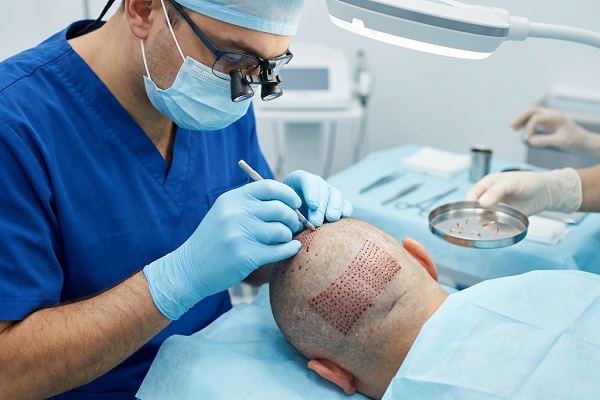
Creating recipient sites determines the ultimate angle, direction, density, and natural appearance of the transplanted hair. Furthermore, each incision creates a micro-wound in the patient’s skin, making it an inherently surgical maneuver.
Donor Punch Extraction Precision
Extracting grafts from the donor area requires microscopic incisions using specialized motor punches. The surgeon must carefully match the punch depth and angle to the natural curl of the follicle beneath the skin surface. A minor error during extraction can cut or destroy the hair bulb, rendering the graft completely useless. Because this step involves cutting living human tissue, Spanish law classifies donor punch extraction strictly as a medical act.
Recipient Site Design and Angulation
The natural appearance of a hair transplant in Madrid depends entirely on the design of the recipient sites. The doctor creates thousands of microscopic slits, balancing density with underlying vascular health.
- Natural Angles: The surgeon aligns incisions to match the natural growth pattern of surrounding hair.
- Vascular Protection: Proper spacing prevents tissue necrosis and ensures adequate blood supply to new grafts.
- Density Control: Doctors adjust site depth based on individual graft size and scalp thickness.
The Legal Risks of Unlicensed Incisions
Under Spanish law, making incisions into human tissue remains an exclusive medical act. Therefore, any clinic allowing technicians or nurses to create donor or recipient incisions operates entirely outside the legal framework.
- Intrusismo Profesional: Unlicensed staff creating surgical cuts face direct criminal prosecution under Article 403 of the Penal Code.
- Clinic Liability: Facilities face immediate license suspension, administrative closure, and heavy financial fines.
- Patient Vulnerability: Unlicensed surgical acts completely void standard medical malpractice insurance coverage.
Nurse Placement: The Vital Role of the Surgical Support Team
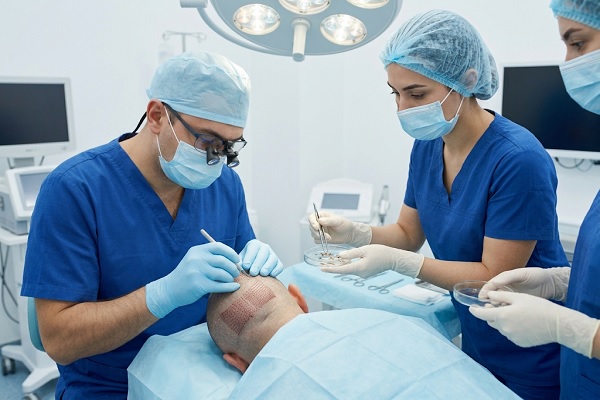
While doctors handle incisions and anesthesia, highly skilled nurses and technicians drive the efficiency and success of hair restoration. A typical FUE session involves placing thousands of delicate follicular units within a strict, time-sensitive window.
Sorting and Classifying Follicular Units
Once extracted, technicians immediately place grafts in chilled storage solutions, such as hypothermosol or sterile saline. Nurses then organize the grafts under microscopic magnification according to hair count:
- Single-hair grafts: Reserved for creating a soft, natural anterior hairline.
- Two-hair grafts: Placed immediately behind the hairline to add natural density.
- Three- and four-hair grafts: Positioned in the mid-scalp and crown for maximum coverage.
Loading Syringes and Implanter Pens
When clinics utilize Choi Implanter Pens (Direct Hair Implantation or DHI), nurses carefully load each individual graft into the hollow needle of the device. This precise task requires exceptional dexterity to prevent trauma to the delicate hair bulb. Nurses also prepare specialized syringes, handle sterile instruments, and assist the doctor during graft insertion. By maintaining an organized sterile field, the nursing team protects graft survival rates.
How Patients Can Verify Clinic Compliance in Madrid
Patients evaluating hair transplant options in Madrid should actively confirm that their chosen clinic respects all legal boundaries. Legitimate facilities transparently explain their team structure and welcome patient inquiries regarding medical credentials.
- Verify Medical Registration: Ensure your lead doctor holds an active registration number with the Colegio Oficial de Médicos de Madrid (ICOMEM).
- Confirm Surgical Roles: Ask explicitly who will perform the anesthesia, punch extractions, and recipient incisions.
- Inspect Facility Accreditation: Verify that the clinic holds official authorization as a surgical healthcare facility (Centro Sanitario Autorizado).
By choosing a fully compliant clinic, patients protect their health, secure legal guarantees, and achieve optimal hair restoration outcomes.
Frequently Asked Questions About Hair Transplant Legality in Madrid
Can a nurse perform graft extraction or incisions in Spain?
Is it legal for technicians to inject local anesthesia?
How can I verify if my clinic in Madrid is fully compliant?
Medical fact-checked and reviewed by SpainHairIndex Editorial Board
Leave a Reply