
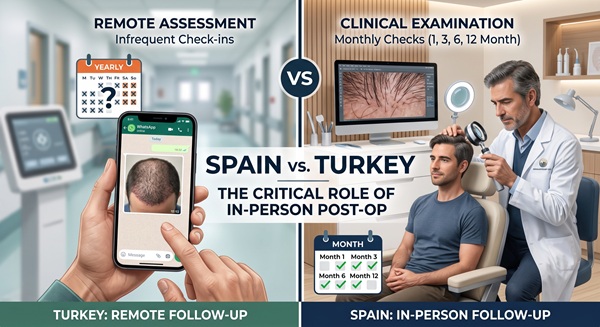
The final aesthetic outcome—a natural hairline, appropriate angle direction, and dense coverage—depends only 50% on the execution inside the operating room. The remaining 50% is determined by graft survival rates, scalp healing, follicular vascularization, and how effectively post-operative complications are managed. This guide breaks down the clinical, physiological, and financial reasons why in-person, month-by-month follow-up care in Spain provides a decisive medical advantage over remote monitoring from abroad.
1. The Limitations of Telemedicine in Hair Restoration
Medical tourism operators in Turkey overwhelmingly rely on remote post-operative tracking, typically asking patients to send smartphone photographs via WhatsApp or email at key milestones (1 week, 1 month, 3 months, 6 months, and 12 months). While convenient, this model introduces significant diagnostic vulnerabilities.
Visual Compression vs. Dermoscopic Precision
Smartphone cameras automatically apply compression algorithms, smoothing filters, and software-based sharpening. These modifications obliterate the microscopic details that a hair restoration specialist needs to see. A compressed 12-megapixel photo taken under home lighting cannot reveal:
- Micro-inflammation around the follicle exit points: Early signs of perifollicular erythema or sub-clinical folliculitis.
- Subdermal cysts: Epidermoid cysts formed by buried graft fragments that feel like small subcutaneous bumps before becoming infected.
- Scalp sebum oxidation & Hyperkeratosis: Seborrheic buildup that smothers emerging grafts and restricts capillary microcirculation.
- Early Miniaturization: Whether un-transplanted native hairs in adjacent areas are miniaturizing due to unmanaged DHT activity.
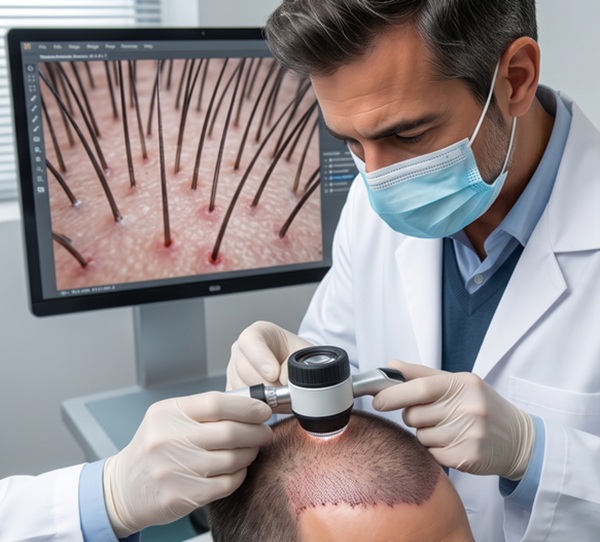
| Diagnostic Metric | Remote Follow-Up (Turkey) | In-Clinic Follow-Up (Spain) |
|---|---|---|
| Tooling Used | User-submitted smartphone photos / video calls | High-definition trichoscopy & manual palpation |
| Follicular Inspection | Surface macro-view only | Up to 100x magnification of graft exit angles |
| Complication Detection | Reactive (after symptoms become visible to the patient) | Proactive (caught during routine scheduled visits) |
| Treatment Prescription | Generic advice / over-the-counter local purchase | Medical-grade, custom-compounded targeted therapies |
| Emergency Access | Subject to time zone lag and messenger delays | Direct, same-day clinical access to your operating surgeon |
2. The Biological Timeline: Why Each Stage Requires Hands-On Care
A hair transplant does not yield linear results. The scalp undergoes distinct physiological transformations over 18 months, each presenting unique medical challenges that dictate whether follicles survive or die off.
THE 18-MONTH FOLLICULAR LIFECYCLE:
Days 1–14: Anchoring & Vascular Reconnection ➔ Months 1–3: Telogen Effluvium (Shock Loss) ➔ Months 4–6: Early Anagen Activation ➔ Months 7–12: Shaft Thickening & Density ➔ Months 12–18: Maturation & Final Coverage
Phase 1: Days 1 to 14 — Graft Anchoring and Scab Removal
During the first 72 hours, newly implanted grafts survive solely via capillary action (plasmatic imbibition). By day 4 to 7, new micro-vessels begin connecting to the bulb (neovascularization). During this delicate phase:
- Scab Management: Scabs must be fully removed by day 10–12 to prevent hyperkeratotic crusts from trapping bacteria and pushing grafts out. In Spain, patients receive specialized in-clinic washing protocols where medical staff physically clean the recipient zone safely.
- Edema Tracking: Fluid injected during anesthesia moves down the face. If mismanaged, severe swelling can increase local pressure and compromise graft oxygenation.
Phase 2: Months 1 to 3 — The “Shock Loss” Crisis and Follicular Dormancy
Between weeks 2 and 8, up to 90% of the transplanted hair shafts shed as follicles enter a trauma-induced resting state (telogen phase). Simultaneously, surrounding non-transplanted native hairs may also shed due to localized surgical trauma—a phenomenon known as shock loss.
- Psychological and Biological Management: This period is universally distressing for patients. In a remote setup, panic often leads to inappropriate self-treatment with aggressive topical products that damage the dermis.
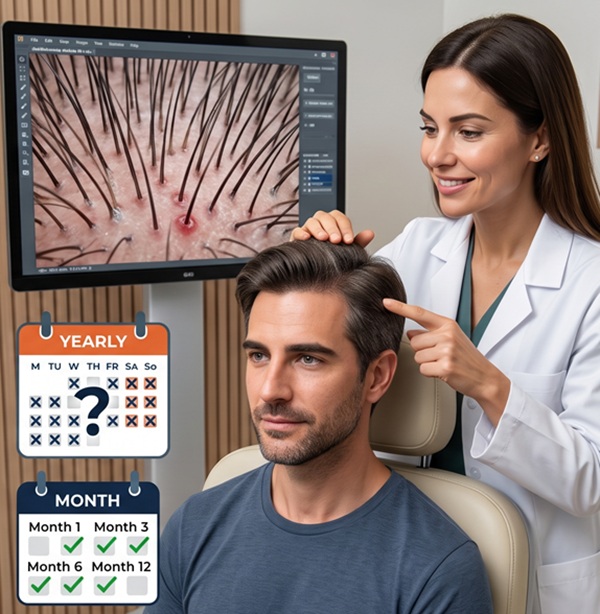
- In-Clinic Interventions in Spain: During the 1-month and 3-month physical check-ups, trichoscopy verifies that while the shaft has shed, the dermal papilla beneath the surface remains viable and healthy. If excessive inflammation is detected, low-level laser therapy (LLLT) or topical anti-inflammatories can be initiated immediately.
Phase 3: Months 4 to 6 — Early Growth and Folliculitis Prevention
Around month 4, hair follicles re-enter the growth phase (anagen). As new, delicate hair shafts force their way through the skin surface, they can encounter resistance from thickened post-surgical tissue.
- Managing Folliculitis and Cysts: If an emerging hair cannot pierce the epidermis, it curls inward, creating localized bacterial folliculitis or painful epidermal cysts. Left unaddressed, a severe cluster of folliculitis can destroy surrounding healthy grafts, creating localized permanent bald patches within the transplanted area.
- The Spanish Advantage: An in-person visit allows a clinician to perform sterile extraction of trapped hairs, lance cysts under aseptic conditions, and prescribe oral antibiotics or topical corticosteroids before any structural damage occurs to the graft bed.
Phase 4: Months 7 to 18 — Density Maturation and Donor Zone Recovery
From month 6 onward, density increases rapidly as hair shafts mature from fine vellus-like hairs into thick terminal shafts. This stage requires careful monitoring of two zones:
- Recipient Zone Optimization: Assessing whether the growth rate aligns with expectations. If density is lagging, targeted clinical therapies—such as Platelet-Rich Plasma (PRP) micro-injections, dutasteride mesotherapy, or customized oral minoxidil dosages—are administered directly at the clinic.
- Donor Zone Health: Evaluating the back and sides of the head for over-harvesting, patchy alopecia, or fibrosis. In Spain, donor area health is monitored to preserve maximum graft capacity in case the patient requires a second procedure later in life.
3. Preventing Severe Complications: Time and Distance Matter
While modern hair transplantation techniques like FUE (Follicular Unit Extraction) and DHI (Direct Hair Implantation) are minimally invasive, they remain surgical procedures. When complications arise, immediate medical proximity is critical.
Scalp Necrosis: The Silent Emergency
Scalp necrosis occurs when tissue dies due to compromised blood supply. It is usually caused by excessive epinephrine during anesthesia, dense graft packing beyond the physiological limit of the blood vessel bed, or overly deep recipient incisions.
Early signs—slight skin pallor followed by a dark purple or blackish discoloration—appear within 24 to 72 hours post-surgery. If a patient is already on a flight back home or communicating via delayed email support, necrosis progresses unchecked, resulting in irreversible scarring and complete loss of hair-bearing skin. In a local clinic setting in Spain, immediate hyperbaric oxygen therapy, vasodilator treatments, and targeted wound care can rescue the tissue.
Donor Area Over-Harvesting and Fibrosis
To cut costs and market “maximum graft” packages, high-volume overseas clinics frequently harvest 4,000 to 5,500 grafts in a single session using large-diameter motorized punches. This often leads to:
- Moth-Eaten Appearance: Permanent visible scarring and denuded patches in the donor area.
- Subdermal Fibrosis: Thick scar tissue underneath the scalp that permanently limits blood circulation, making future procedures impossible.
In contrast, Spanish clinics operate under strict European medical protocols, prioritizing long-term donor preservation over viral marketing claims.
4. The Hidden Costs of Overseas Hair Surgery
A realistic comparison between hair transplant in Spain and Turkey requires looking beyond the initial sticker price. What appears to be a €2,000 package in Turkey often carries hidden post-operative financial liabilities.
True Cost Equation:
International Surgery Cost = Initial Medical Package + Flights/Hotels + Time Off Work + Out-of-Pocket Local Emergency Care + Post-Op Prescription Supplies + Cost of Repair Surgery (if complications occur)
The Financial Burden of Local Repair and Corrective Care
When a patient returning from abroad experiences complications—such as severe infection, bad hairline design, unnatural growth angles, or low density—they quickly discover a harsh reality: local dermatologists and hair clinics in their home country are often reluctant to assume liability for fixing another overseas clinic’s surgical mistakes.
Corrective repair surgeries in Spain using body hair harvesting or delicate graft redistribution can cost anywhere from **€4,000 to €8,000**, completely wiping out any initial savings achieved by traveling abroad.
5. Legal Accountability and European Health Standards
Choosing to undergo a medical procedure in Spain offers legal protections and safety frameworks that simply do not exist in foreign medical tourism destinations.
- Direct Doctor Responsibility: In Spain, the operating surgeon is legally bound by medical responsibility frameworks overseen by the Spanish Ministry of Health and local medical colleges (Colegio Oficial de Médicos). The doctor who designs your hairline and extracts/implants your grafts is the person accountable for your outcome.
- Clinic Accreditation & Hygiene Standards: Spanish clinics operate under strict EU medical standards, ensuring sterile surgical suites, certified medical equipment, and transparent patient consent documentation.
- Consumer Protection: If medical negligence occurs, Spanish legislation provides clear legal recourse, insurance coverage, and patient compensation rights. Overseas, pursuing legal action against a clinic operating under a foreign legal jurisdiction is notoriously difficult and financially prohibitive.
Conclusion: Your Hair Is a Lifelong Investment, Not a One-Day Bargain
A hair transplant is a permanent modification to your physical appearance. While foreign medical destinations offer lower upfront prices, they transfer the entire post-operative medical risk onto the patient once they step onto the plane home.
By selecting a top-tier hair restoration clinic in Spain, you are securing far more than an operation: you are investing in a 12-to-18-month comprehensive medical partnership. Having direct access to your surgeon, scheduled trichoscopic evaluations, custom-compounded medical treatments, and immediate emergency care guarantees that your journey toward full density is safe, predictable, and successful.
Before committing to an overseas package, ask yourself one final question: When your transplanted hair is in its most vulnerable recovery phase at month 3, do you want to rely on a low-resolution WhatsApp photo, or sit in the clinic chair of the doctor who performed your surgery?
Medical fact-checked by the SpainHairIndex Editorial Team.
Leave a Reply