
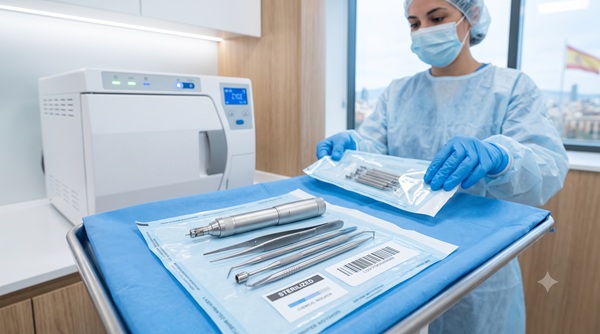
When evaluating hair restoration options, prospective patients frequently focus on graft survival rates, surgeon credentials, and before-and-after aesthetics. However, the true bedrock of surgical success—and patient safety—lies in an often-unseen domain: surgical sterilization protocols and infection control.
Spain has emerged as a premier global hub for advanced Follicular Unit Extraction (FUE) and Direct Hair Implantation (DHI). Beyond world-class artistic outcomes, the defining competitive advantage of Spanish hair restoration clinics is their uncompromising adherence to European Union healthcare directives and strict ISO quality standards.
In this deep dive, we explore how leading hair transplant centers in Spain implement hospital-grade sterilization protocols to eliminate the risk of cross-contamination and ensure flawless clinical safety.
Key Safety Highlights in Spanish FUE Clinics:
- Regulatory Oversight: Strict compliance with European Medical Device Regulation (MDR) & Spanish AEMPS guidelines.
- Sterilization Standard: Class B Vacuum Autoclaves operating under ISO 17665 protocols.
- Traceability: Single-use micro-punches & digitally tracked instrument sterilization lots.
- Air Purity: Positive pressure operating suites featuring HEPA-filtered laminar airflow.
The Anatomy of Infection Control in FUE Surgery
Although FUE is considered a minimally invasive outpatient procedure, it involves making thousands of micro-incisions across both the donor and recipient areas of the scalp. Each micro-punch insertion and implant placement creates a direct pathway through the epidermal barrier. Without stringent aseptic measures, these micro-incisions present potential risks for bacterial exposure (such as Staphylococcus aureus) or cross-contamination.
To mitigate these risks completely, Spanish clinics operate under a dual framework of preventative barrier technology and validated sterilization cycles.
1. Hospital-Grade Autoclave Protocols (ISO 17665 Compliance)
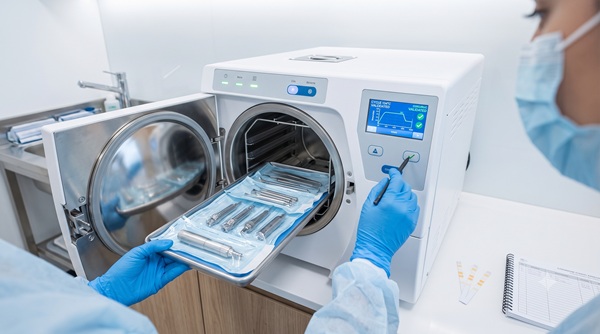
The cornerstone of instrument decontamination in Spain is the mandatory use of Class B Fractional Pre-Vacuum Autoclaves, governed by ISO 17665 (Sterilization of health care products — Moist heat).
Unlike basic Class N or S autoclaves often found in non-regulated settings, Class B autoclaves utilize a multi-stage vacuum pump to completely evacuate air from the sterilization chamber before injecting high-pressure saturated steam. This ensures that steam penetrates the micro-bores and internal lumens of hollow surgical instruments, such as FUE punch holders and implanter pen bodies.
| Sterilization Phase | Spanish Clinic Standard (Class B) | Clinical Objective |
|---|---|---|
| Pre-Vacuum Extraction | 3 to 4 Fractionated Air Extraction Cycles | Eliminates air pockets in hollow instruments |
| Thermal Processing | 134°C (273°F) at 2.1 bar for minimum 3.5 – 5 mins | Destroys all bacterial spores, viruses, & micro-organisms |
| Biological Monitoring | Weekly Geobacillus stearothermophilus Spore Tests | Provides empirical verification of autoclave efficacy |
2. ISO Cleanroom Standards & Air Quality Management
Preventing cross-contamination extends beyond the surgical tray to the ambient environment where grafts are sorted and prepared under microscopes.
In accordance with ISO 14644 (Cleanrooms and associated controlled environments), premium hair transplant operating rooms in Spain are engineered with:
- HEPA Filtration (H14 Grade): Traps 99.995% of airborne particles, microbes, and pollutants down to 0.3 microns.
- Positive Air Pressure: Ensures that air flows outward when surgical suite doors open, preventing unsterilized corridor air from entering the procedure room.
- Laminar Airflow Systems: Maintains a continuous downward flow of purified air directly over the patient and graft-sorting workstations, keeping delicate hair follicles free from airborne pathogens during overseas transit/handling.
3. Single-Use Consumables vs. Reusable Instruments
Spain’s regulatory health agency—the AEMPS (Spanish Agency for Medicines and Health Products)—enforces strict categorization regarding medical devices:
- Micro-Punches & Blades: Top-tier Spanish clinics utilize 100% single-use, medical-grade surgical steel or sapphire blades. Each punch is opened from a sterile pouch in front of the patient and discarded immediately into sharp-waste containers post-surgery.
- Chilled Graft Holding Trays: Sterile, single-use petridishes paired with specialized holding solutions (such as HypoThermosol® or chilled Ringer’s Lactate) maintain physiological pH and temperature while eliminating surface cross-contamination.
4. Full Instrument Traceability & Patient Auditing
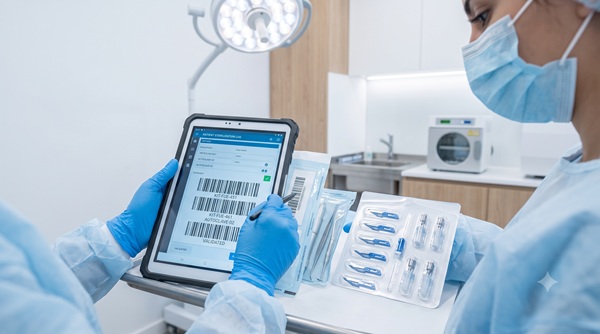
A key requirement under ISO 13485 (Medical devices — Quality management systems) is end-to-end traceability. Every sterilized pouch containing forceps, tray holders, or implanters features a chemical indicator bar and a unique barcode stamp.
Before the first extraction begins, the surgical team logs these barcode labels directly into the patient’s digital medical record. This guarantees that every instrument used on a specific patient can be traced back to its exact autoclave cycle, operator, temperature log, and biological test validation.
Why Spain Sets the European Benchmark for FUE Safety
While many medical tourism destinations operate with variable oversight, Spain operates under the comprehensive regulatory umbrella of the European Union. Clinics in cities like Madrid, Barcelona, and Valencia are subjected to unannounced inspections by regional health authorities (*Consejerías de Sanidad*) to verify waste disposal compliance, autoclave calibration certificates, and sterile storage conditions.
For international patients traveling for hair restoration, choosing a Spanish clinic means opting for peace of mind: surgical precision executed within an uncompromised, hospital-grade sterile environment.
Frequently Asked Questions About Hygiene Protocols in Spain
Are FUE micro-punches reused between patients in Spain?
How do Spanish clinics test their autoclaves for effectiveness?
What regulations govern hair transplant facilities in Spain?
Medical fact-checked and reviewed by SpainHairIndex Editorial Board
Leave a Reply