Blog

  • Emergency Preparedness: The Lifesaving Equipment Every Spanish Hair Clinic Must Have

    Emergency Preparedness: The Lifesaving Equipment Every Spanish Hair Clinic Must Have

    When evaluating the standards of a hair transplant clinic in Spain, aesthetic expertise and high graft survival rates are only part of the equation. Behind the scenes of every successful Follicular Unit Extraction (FUE) or Direct Hair Implantation (DHI) procedure lies a fundamental priority: uncompromising medical safety.

    Although minor outpatient surgeries are statistically safe, local anesthetics and prolonged procedural times carry inherent systemic risks, such as anaphylactic reactions, vasovagal syncope, or cardiac events. In Spain, health authorities enforce strict regulatory frameworks governing outpatient surgery suites (Unidades de Cirugía Mayor y Menor Ambulatoria).

    In this article, we outline the mandatory lifesaving equipment, emergency crash carts, and resuscitation protocols that every accredited Spanish hair clinic must maintain by law.

    (more…)

  • Sterilization Protocols for FUE: How Spanish Clinics Prevent Cross-Contamination

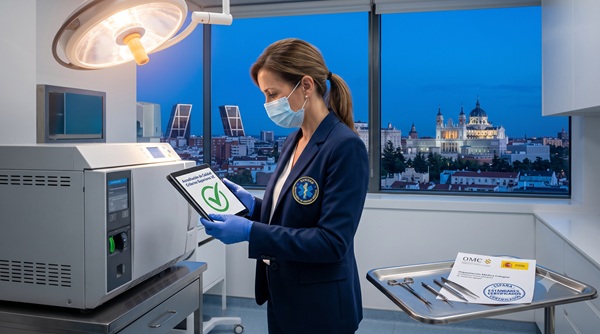
    Sterilization Protocols for FUE: How Spanish Clinics Prevent Cross-Contamination

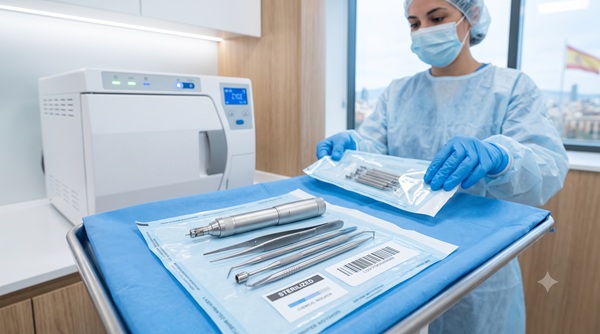
    When evaluating hair restoration options, prospective patients frequently focus on graft survival rates, surgeon credentials, and before-and-after aesthetics. However, the true bedrock of surgical success—and patient safety—lies in an often-unseen domain: surgical sterilization protocols and infection control.

    Spain has emerged as a premier global hub for advanced Follicular Unit Extraction (FUE) and Direct Hair Implantation (DHI). Beyond world-class artistic outcomes, the defining competitive advantage of Spanish hair restoration clinics is their uncompromising adherence to European Union healthcare directives and strict ISO quality standards.

    In this deep dive, we explore how leading hair transplant centers in Spain implement hospital-grade sterilization protocols to eliminate the risk of cross-contamination and ensure flawless clinical safety.

    (more…)

  • The Hidden Danger of “Fly-by-Night” Doctors: Intrusismo Médico in Spanish Hair Restoration

    The Hidden Danger of “Fly-by-Night” Doctors: Intrusismo Médico in Spanish Hair Restoration

    Spain is currently experiencing a historic hair restoration boom. From the clinics of Madrid and Barcelona to the hubs in Valencia and Málaga, the demand for follicular unit extraction (FUE) has never been higher. However, this commercial success has birthed a dangerous shadow industry: Intrusismo Médico. This is not just a regulatory issue; it is a clinical crisis that is leaving thousands of patients with irreversible scarring, unnatural hairlines, and destroyed donor areas.

    (more…)

  • The Trichology Elite: Why Membership in AEDV or SECOMCYT Matters for Your Graft

    The Trichology Elite: Why Membership in AEDV or SECOMCYT Matters for Your Graft

    Spainhairindex.com: Connecting Patients with the Pinnacle of Hair Restoration Expertise.

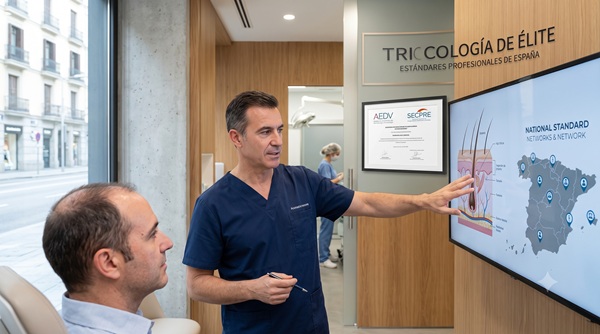
    In the delicate art of hair restoration, your graft is the canvas, and your surgeon is the artist. But how can you be sure you’re choosing a specialist with the highest level of mastery and dedication? The answer lies in the professional medical societies they belong to.

    (more…)

  • Medical Licensing in Spain: How to Verify Your Hair Surgeon’s OMC Registration Number

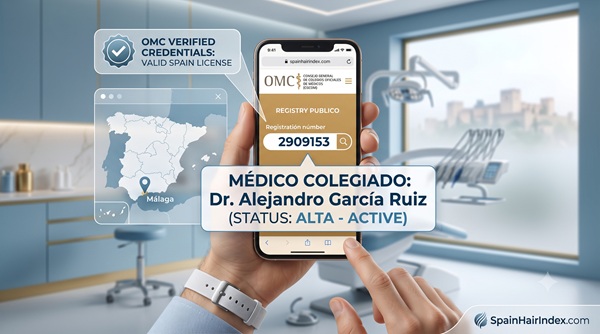
    Medical Licensing in Spain: How to Verify Your Hair Surgeon’s OMC Registration Number

    Patient Safety Notice: In Spain, performing any surgical hair restoration without a valid medical license and registration is illegal. This guide shows you exactly how to verify your doctor’s credentials in under two minutes.

    Introduction: The Non-Negotiable Standard of Hair Transplant Safety

    Spain has rapidly emerged as a premier European destination for high-quality hair transplant surgery. Attracted by world-class clinics, cutting-edge FUE and DHI technologies, and rigorous European medical standards, thousands of international patients trust Spanish practitioners with their scalps every year. However, as the market expands, so does the risk of encountering low-cost “hair mills” where unlicensed technicians quietly perform surgeries under the radar.

    In hair restoration, your surgeon’s credentials are your ultimate safety net. A hair transplant is not a simple cosmetic treatment—it is a micro-surgical procedure involving thousands of tiny incisions, local tumescent anesthesia, and strict donor management. To legally practice medicine in Spain, every single doctor must be registered with the Organización Médica Colegial (OMC). If a practitioner cannot or will not provide their OMC registration number, you should not let them touch your hair.

    (more…)

  • Is Your Hair Clinic Legally Registered? How to Check the REGECS Database in Spain

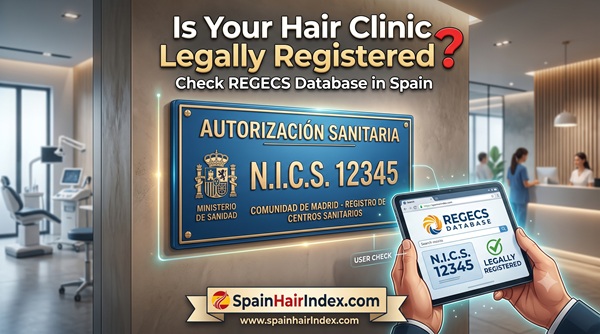
    Is Your Hair Clinic Legally Registered? How to Check the REGECS Database in Spain

    The demand for hair transplants in Spain has skyrocketed in recent years. With world-class surgeons operating in cities like Madrid, Barcelona, and Malaga, patients no longer feel the absolute need to travel abroad for quality results. However, this boom has also led to the opening of unauthorized centers, aesthetic cabins, or clinics operating without the mandatory sanitary licenses.

    In Spain, a hair transplant is considered a minor surgical procedure. Therefore, any center offering this service must legally hold an active Sanitary License (Autorización Sanitaria) granted by its respective Autonomous Community.

    (more…)

  • Medical Liability in Spain: What Protection Do You Have if a Hair Transplant Fails?

    Medical Liability in Spain: What Protection Do You Have if a Hair Transplant Fails?

    When researching a hair restoration procedure, most patients spend months comparing graft counts, extraction techniques (like FUE or DHI), and before-and-after photos. However, there is a critical question that usually only arises right before booking the surgery: What happens if the hair transplant fails, and what legal protection do I have?

    (more…)

  • Beyond EU Standards: What Makes Spain’s Medical Inspections the Strictest in Europe?

    Beyond EU Standards: What Makes Spain’s Medical Inspections the Strictest in Europe?

    When international patients from the UK, France, or Germany look abroad for hair transplantation or cosmetic surgery, their primary driver is often cost optimization. Destinations like Turkey, Albania, or Asia heavily market all-inclusive packages. However, savvy medical tourists are increasingly shifting their focus from the price tag to a more critical metric: patient safety and structural regulation.

    (more…)

  • Advanced Alopecia and Scars: What to Look for in a High-Complexity Hair Clinic

    Advanced Alopecia and Scars: What to Look for in a High-Complexity Hair Clinic

    When dealing with standard hair restoration cases, most modern clinics can deliver satisfactory results using automated protocols. However, when a patient presents with advanced alopecia (Norwood Scale 6 or 7) or extensive scalp scarring—whether from trauma, burns, medical conditions, or previous poorly executed surgeries—the clinical approach must shift entirely. These scenarios represent high-complexity cases where standard procedures are not only insufficient but can also lead to irreversible donor depletion or severe skin damage.
    (more…)

  • Spanish Royal Decree vs. Reality: Legal Requirements for Hair Clinics in Spain

    Spanish Royal Decree vs. Reality: Legal Requirements for Hair Clinics in Spain

    Spain has emerged as one of the premier destinations for premium hair restoration in Europe. While countries like Turkey dominate the high-volume, low-cost market, Spain attracts patients who prioritize absolute medical safety, strict European Union regulations, and robust legal protections.

    (more…)